Biocracked
←

#animal study

1 article
Approach: macro science (with a conceptual split). Palette: D, bold color field.

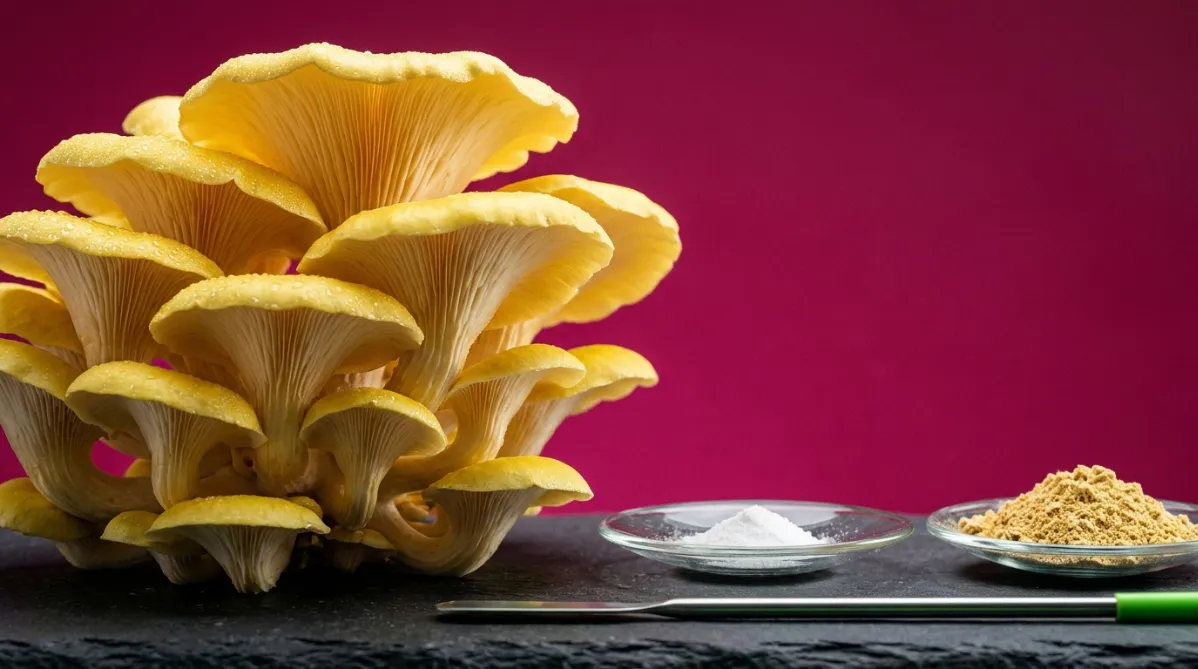
Extreme close-up photograph of a cluster of golden oyster mushrooms (Tamogitake), their ruffled, canary-yellow caps and fine gill structures sharply detailed, shot at a slight low three-quarter angle against a saturated magenta backdrop. In the foreground, a small glass watch dish holds a pinch of fine white crystalline powder, the isolated compound, sitting plain and inert beside a heap of fawn-yellow dried mushroom powder in a second dish. Soft directional studio light from the upper left gives the caps a translucent glow and creates crisp, short shadows. Tiny dew-like droplets cling to the gills. A single thin electric green stem of a lab spatula glints at the edge of the frame. Mood: curious, vivid, quietly skeptical, with the mushroom clearly outshining the isolate. No text or labels.
research

Este hongo reduce la grasa hepática en roedores — Su compuesto estrella no lo hizo

BY NOVA CHEN ·

La ergothioneína es el compuesto al que todos atribuyen la reputación saludable de los hongos, pero un nuevo estudio en roedores complica esa historia. Ratas y ratones obesos alimentados con polvo de hongo ostra dorado (Tamogitake) mostraron menos colesterol y triglicéridos en el hígado, mientras que los que recibieron ergothioneína pura no lo hicieron. El hongo también aumentó la excreción fecal de colesterol y ácidos grasos libres, algo que no ocurrió con el aislado. Los autores concluyen que los efectos no pueden atribuirse solo a la ergothioneína. Se trata de investigación exclusivamente en roedores, y el hongo representó un considerable 5 % de la dieta de los animales, así que no sustituyas tu examen hepático por un salteado.

This page is available in